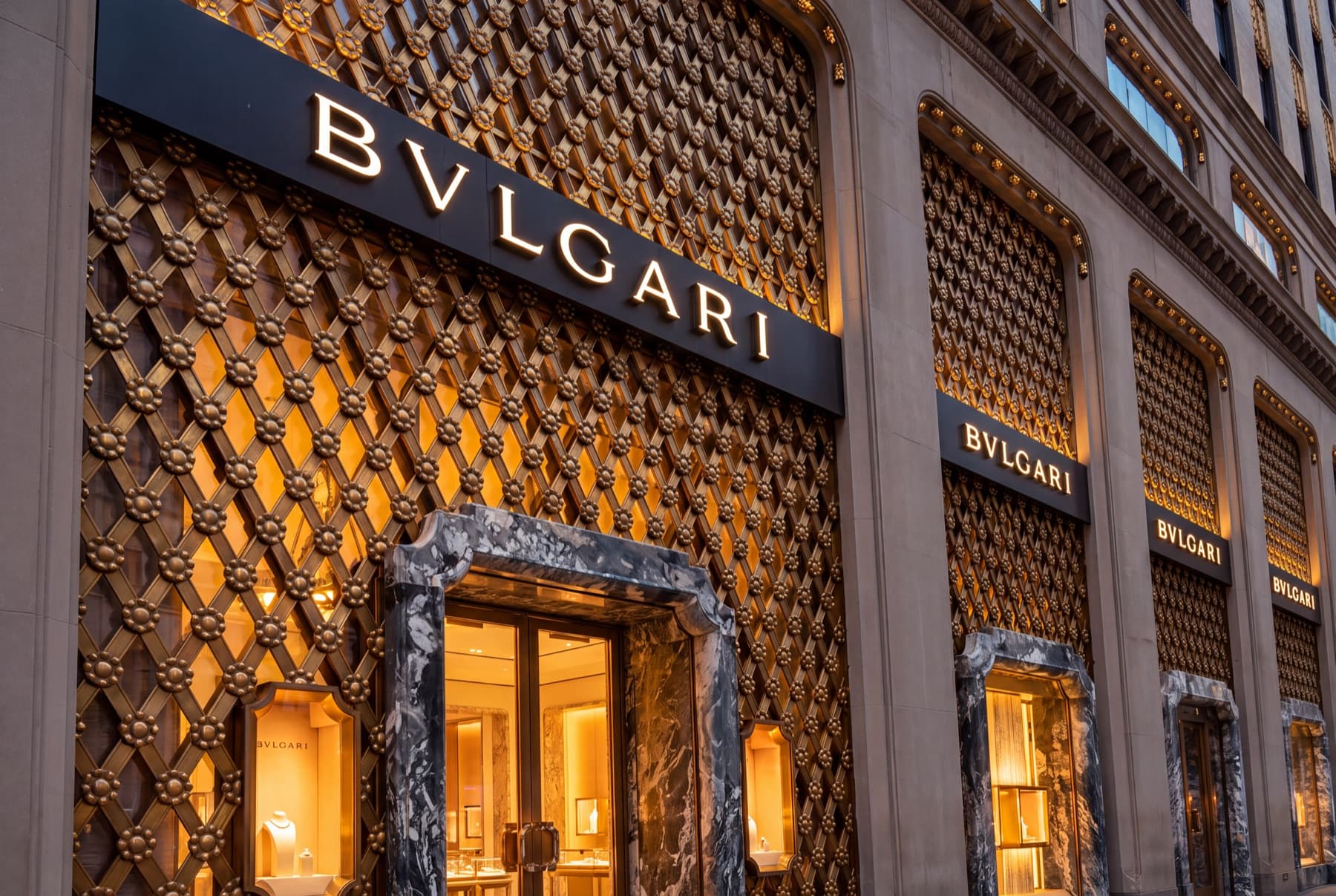
Where the French houses prize restraint, Bulgari celebrates boldness. The Roman jeweler built its name on color, volume, and a distinctly Italian sense of glamour — and its vintage pieces bring an unmistakable confidence to the estate market.
A Roman point of view
Founded in Rome in 1884, Bulgari drew on classical architecture and antiquity for inspiration, developing a look all its own: rounded, substantial forms, saturated color, and motifs borrowed from ancient coins and Roman design.
The signatures
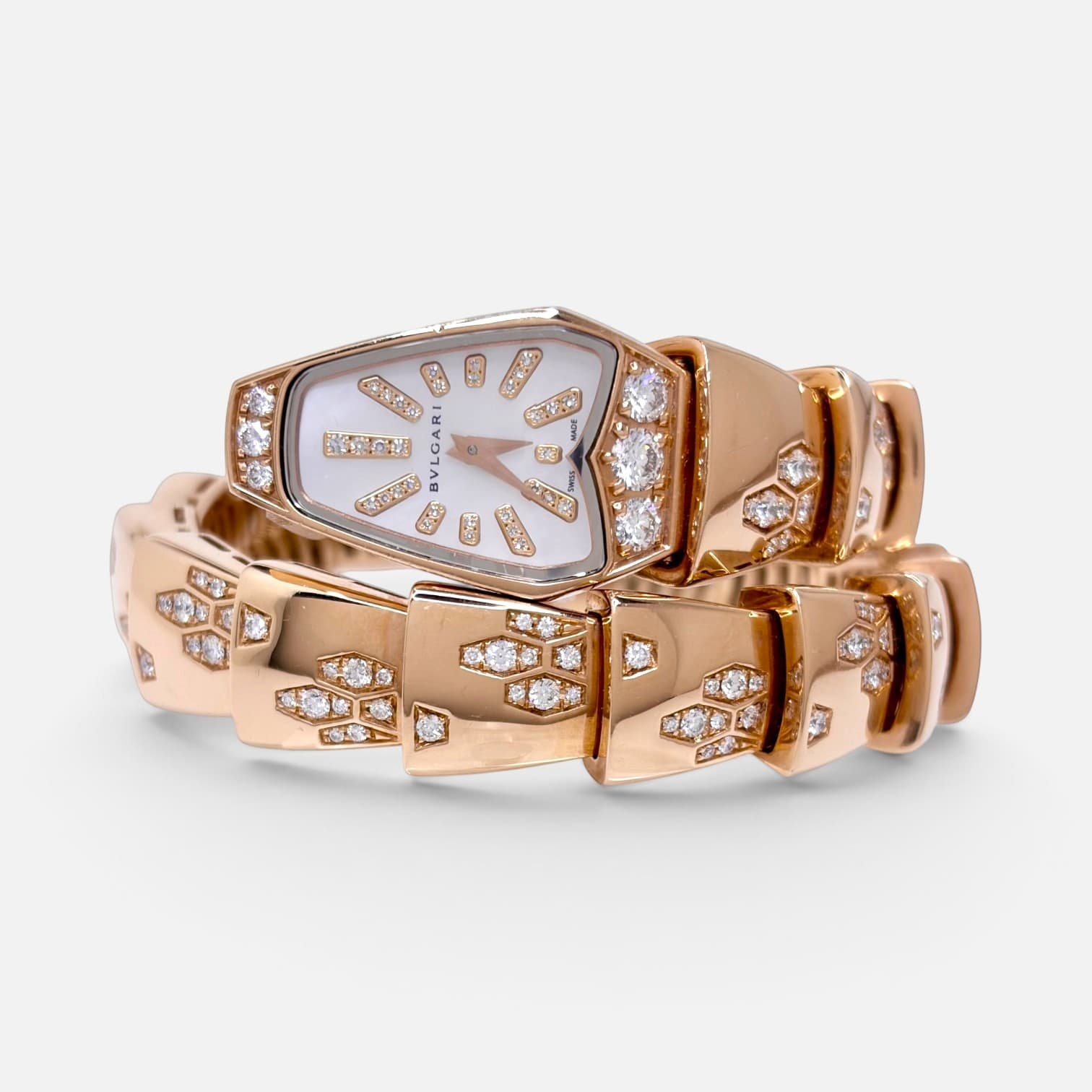
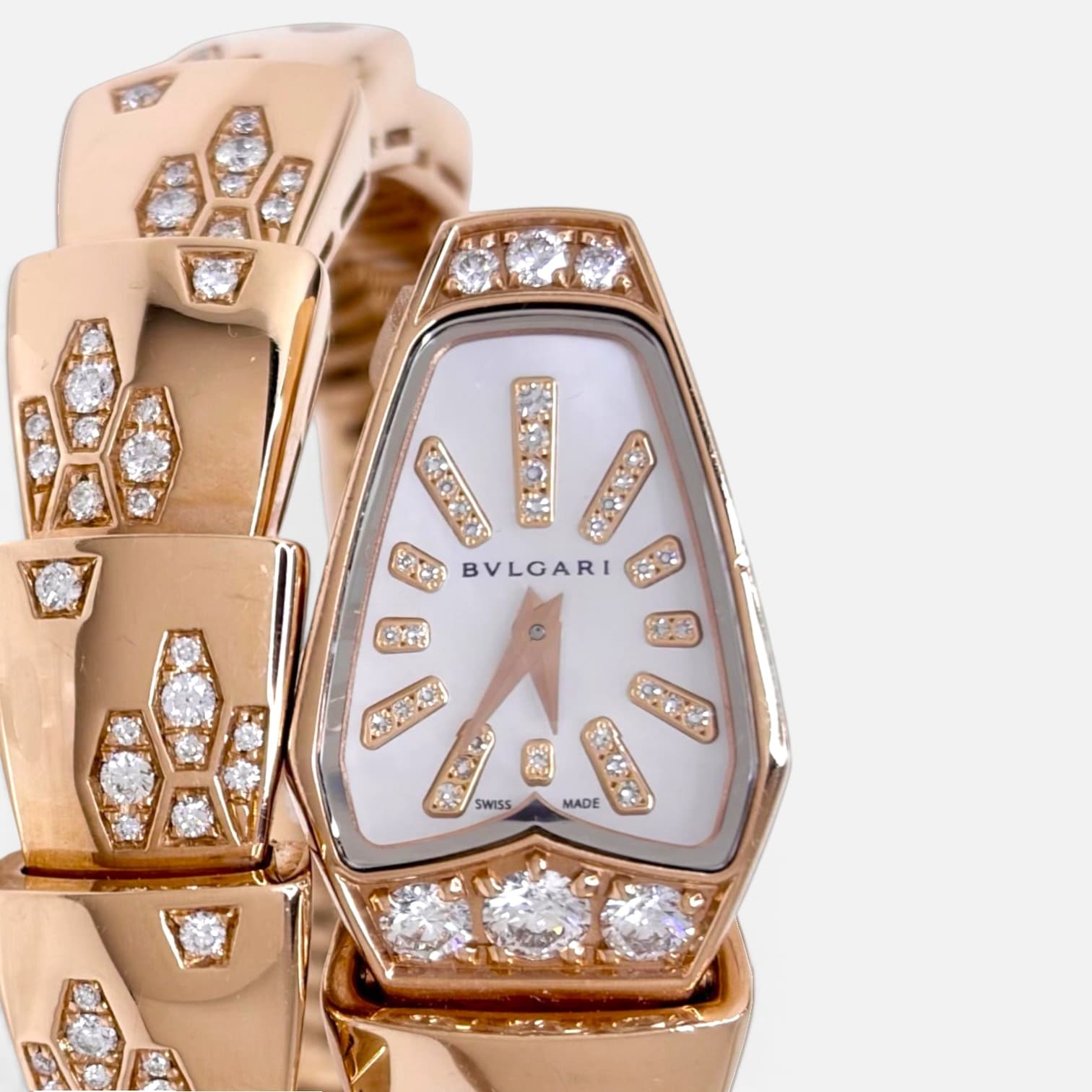
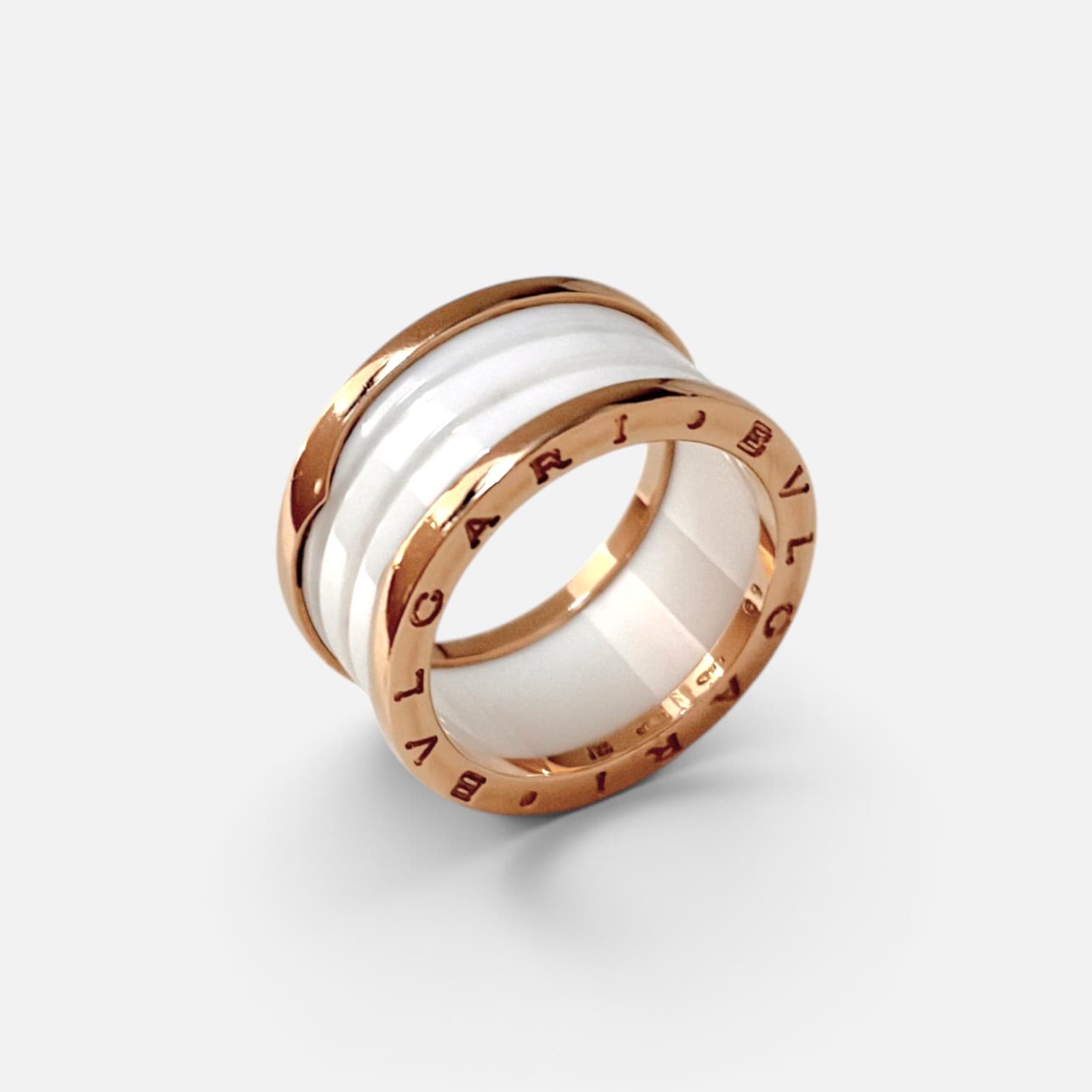
The Serpenti — the coiled snake, often rendered in enamel and gems — is the house's most famous design. The Tubogas technique gives Bulgari's flexible, tubular gold its signature look; the Monete collection sets ancient coins into modern jewelry; and B.zero1 and Bulgari-Bulgari carry the name literally into the design.
Why they're collectible
Bulgari's fearless use of color and its instantly recognizable forms make its vintage pieces stand out in any collection. Serpenti and mid-century color pieces are especially in demand, prized for craftsmanship and unmistakable style.
What to look for
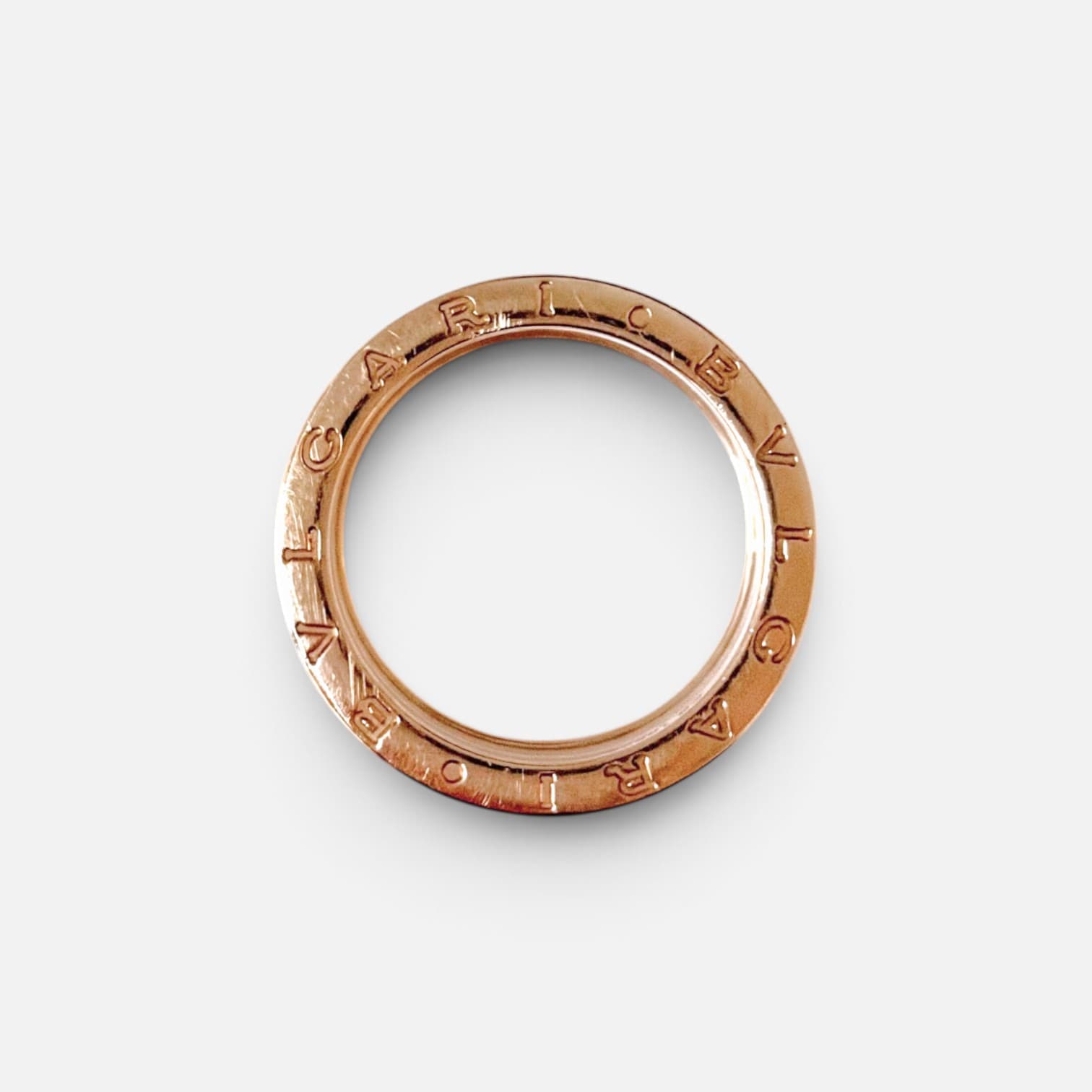
Authentic pieces are signed "Bulgari" — often spelled "BVLGARI" in the Roman style — numbered, and hallmarked. Check the enamel on Serpenti pieces, the flex of Tubogas, and the security of colored stones. Provenance and authentication matter — as always, we verify every signed piece before it's offered.