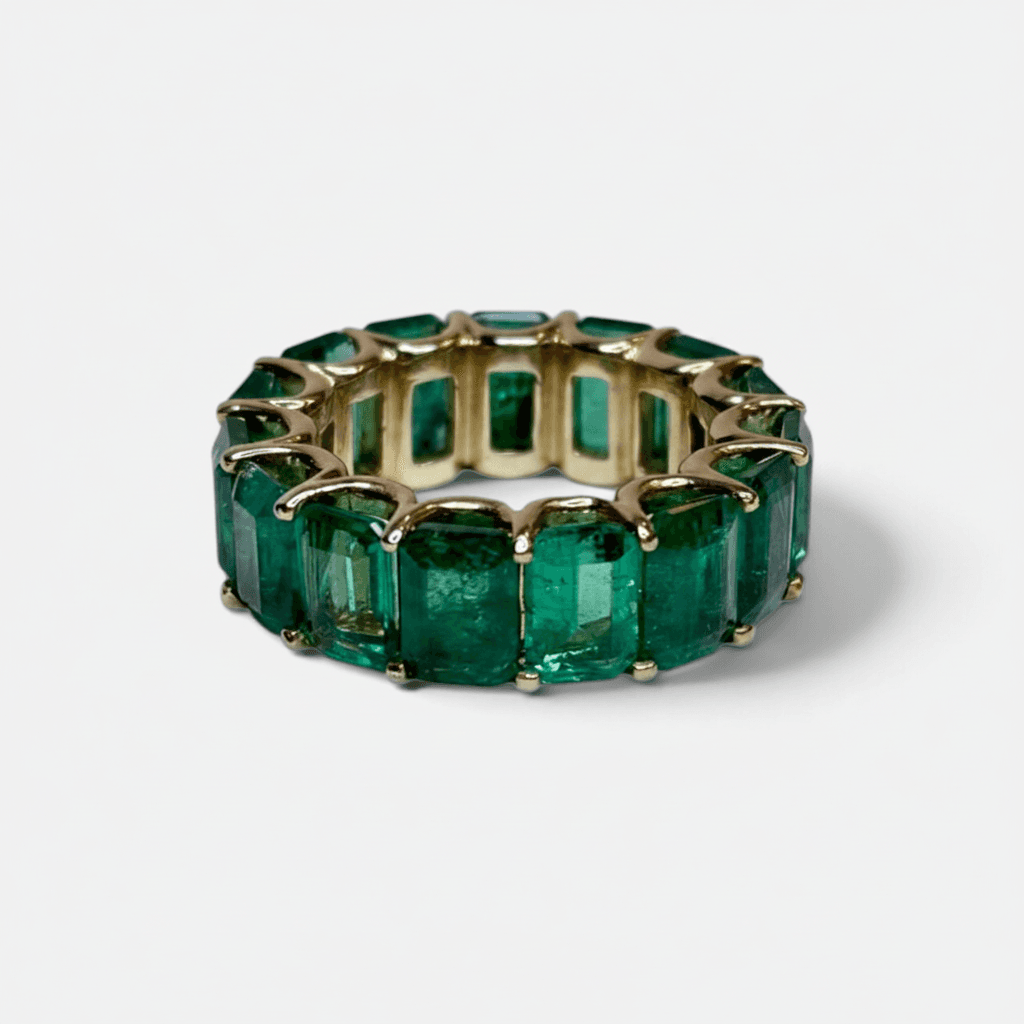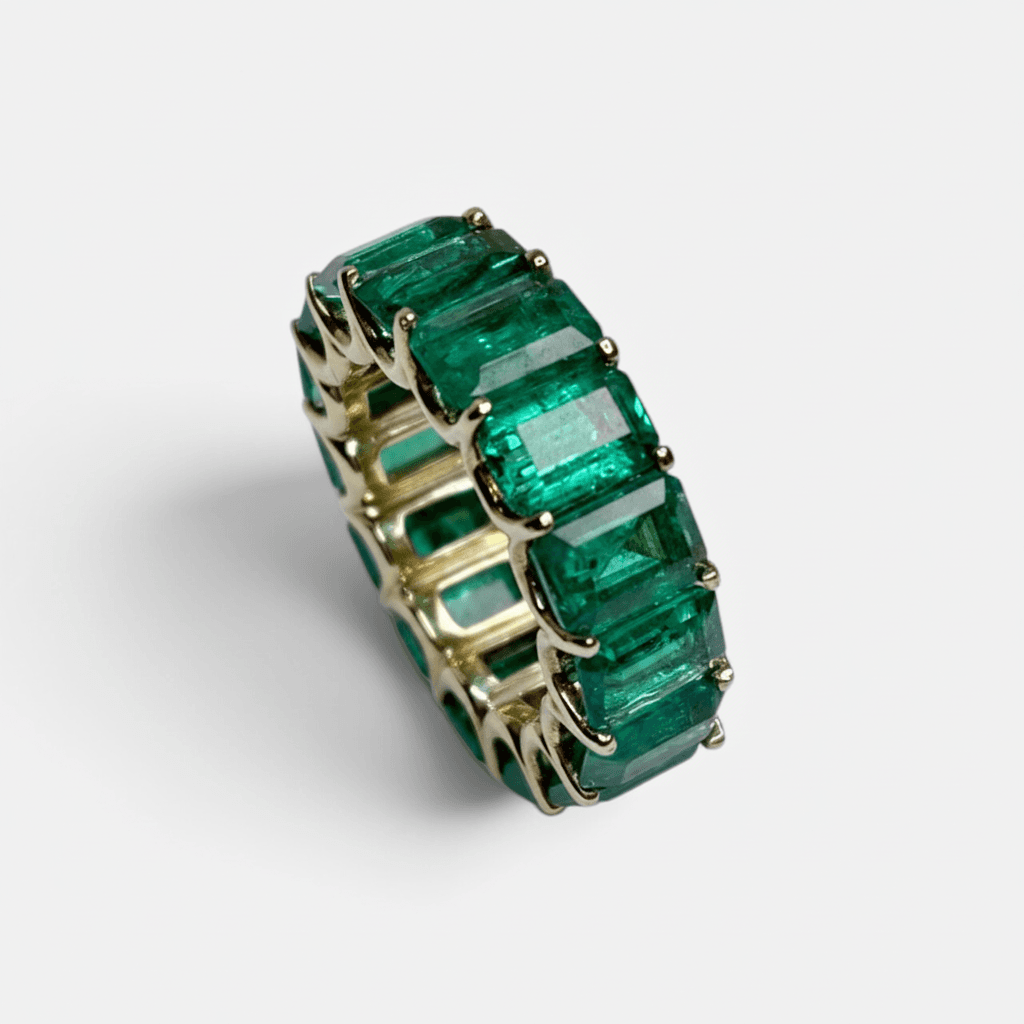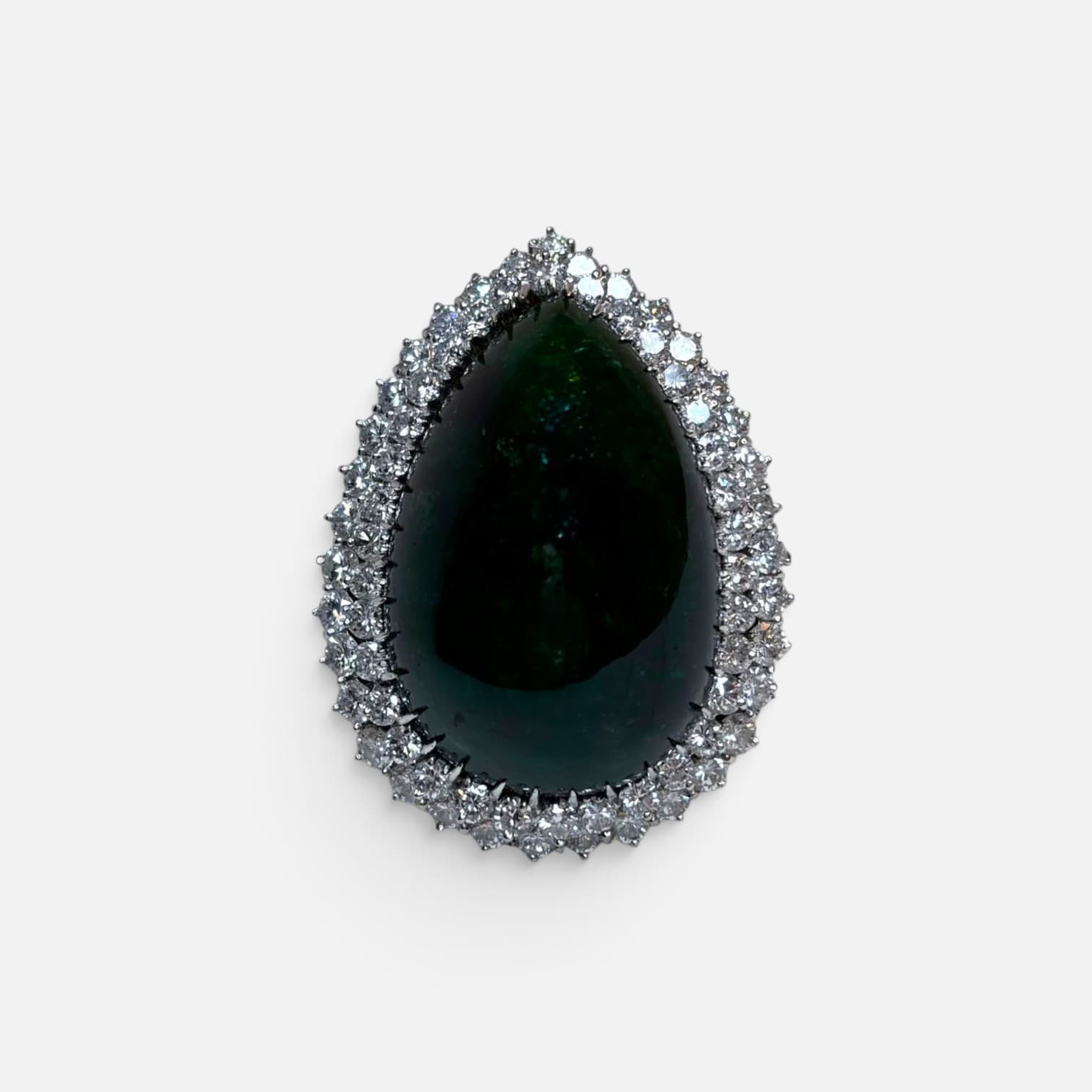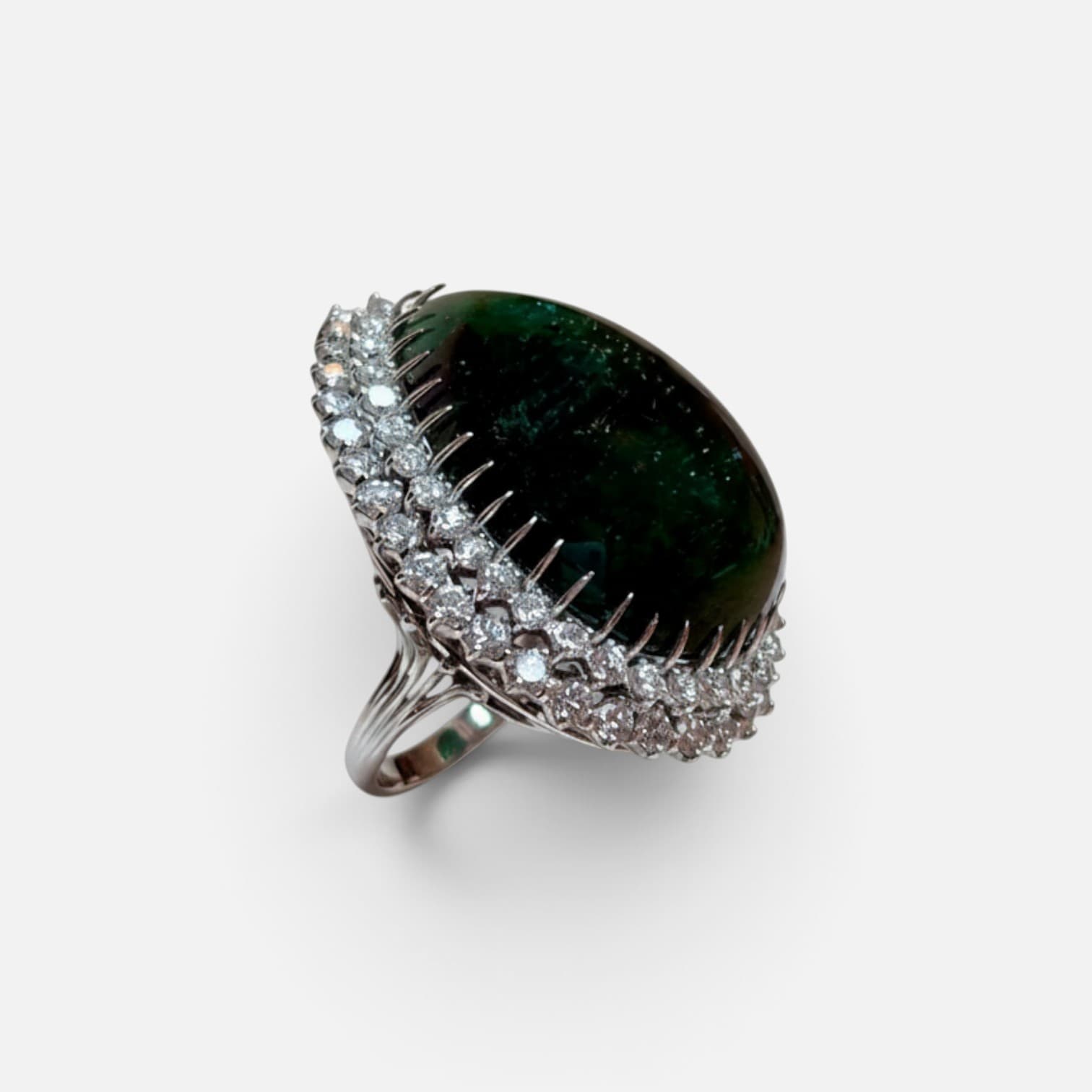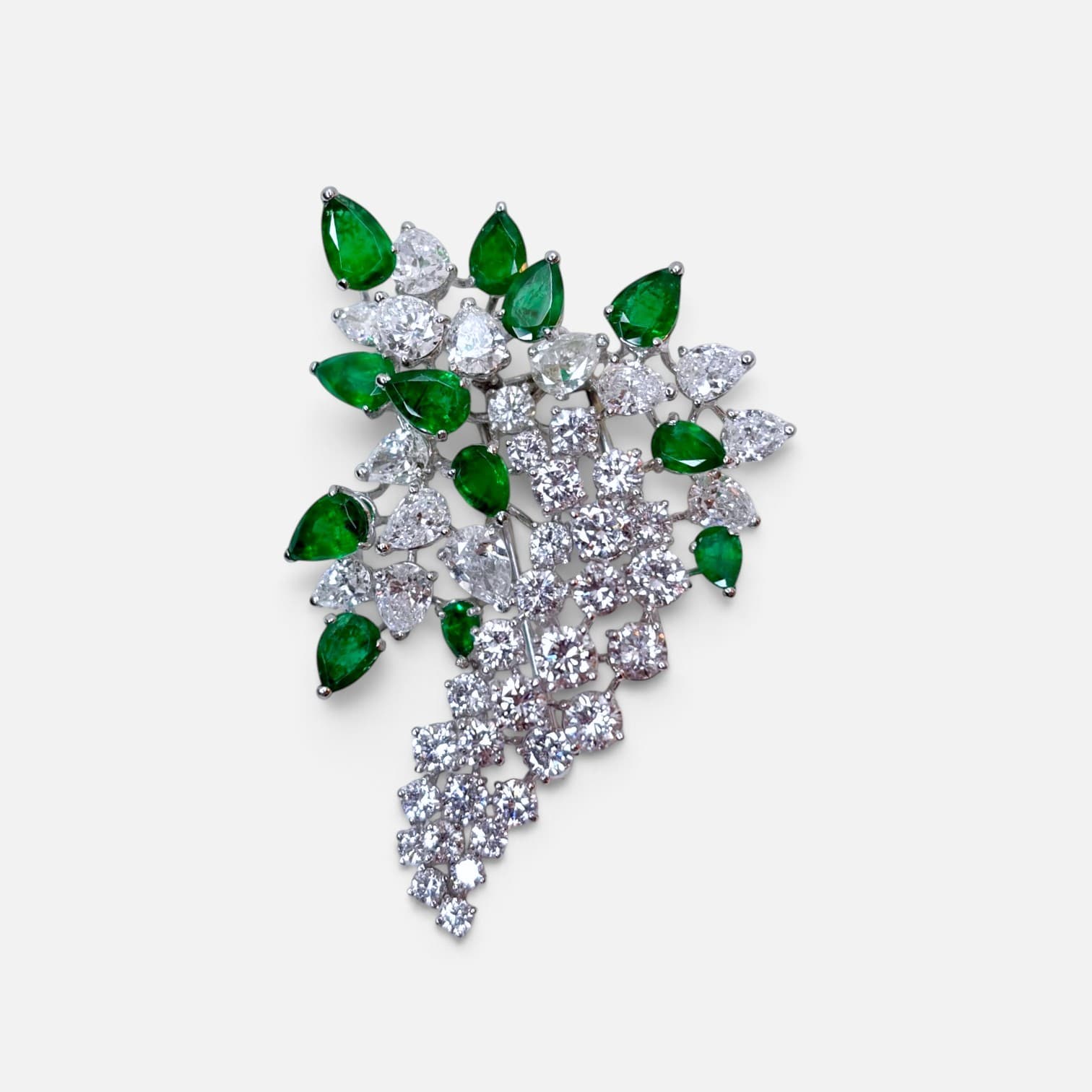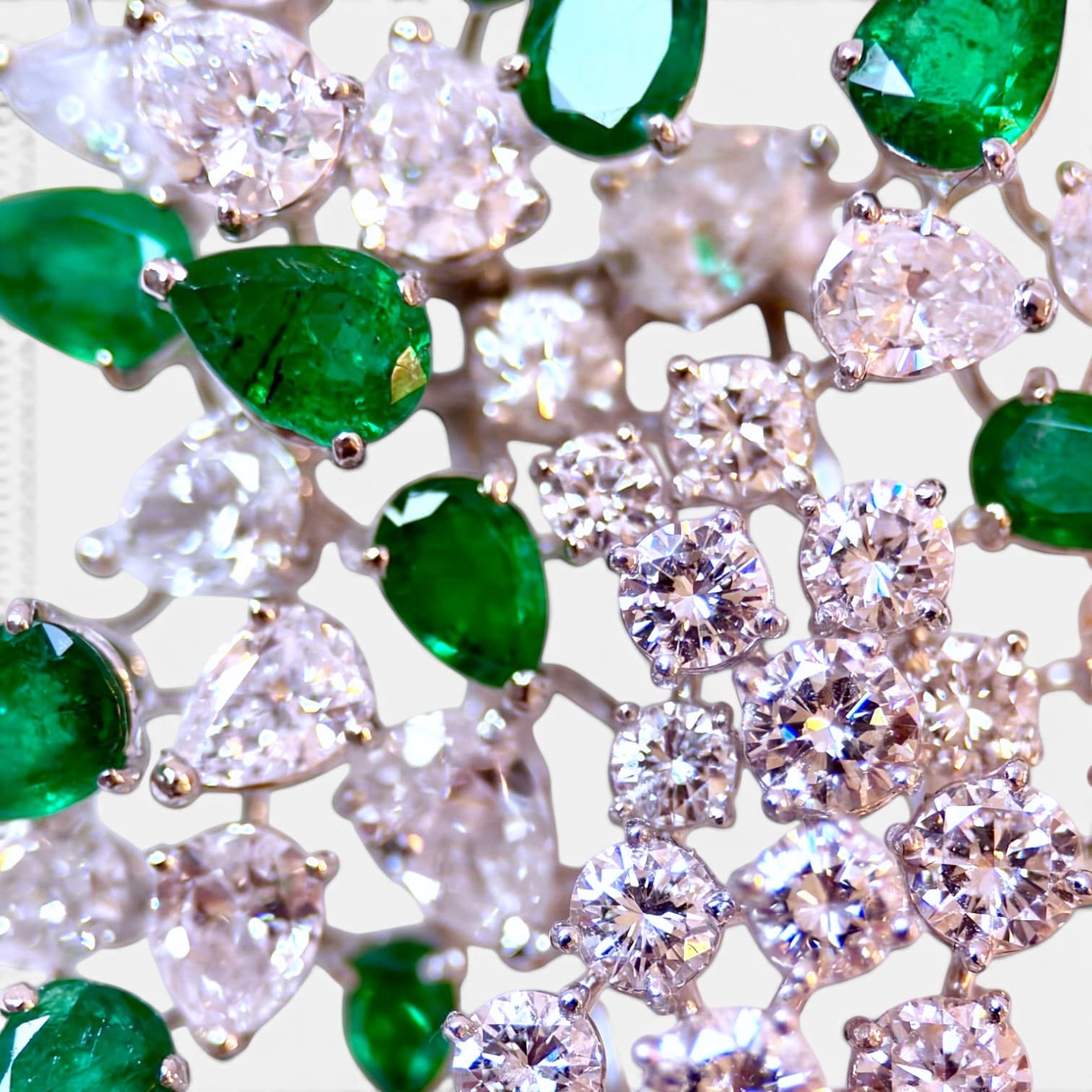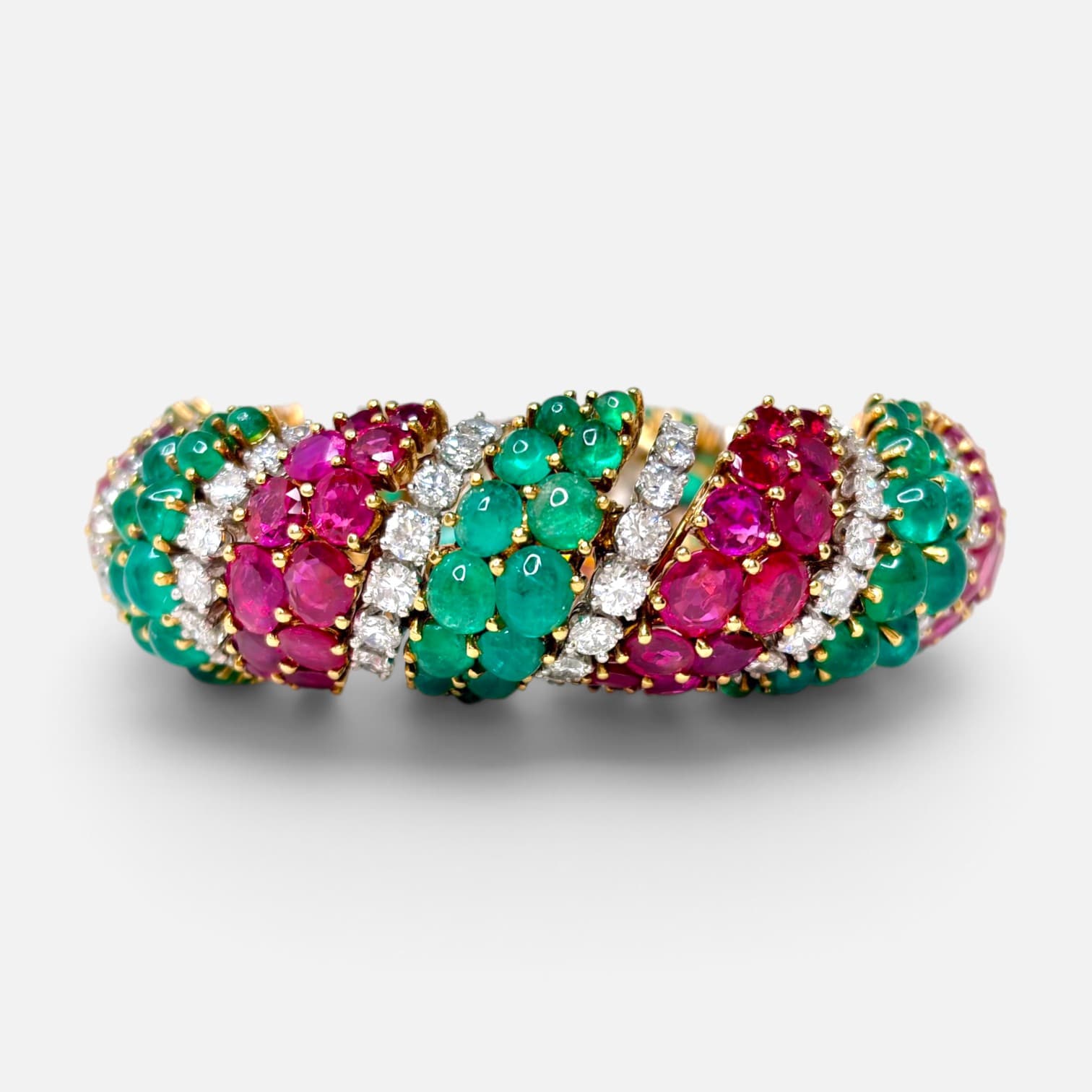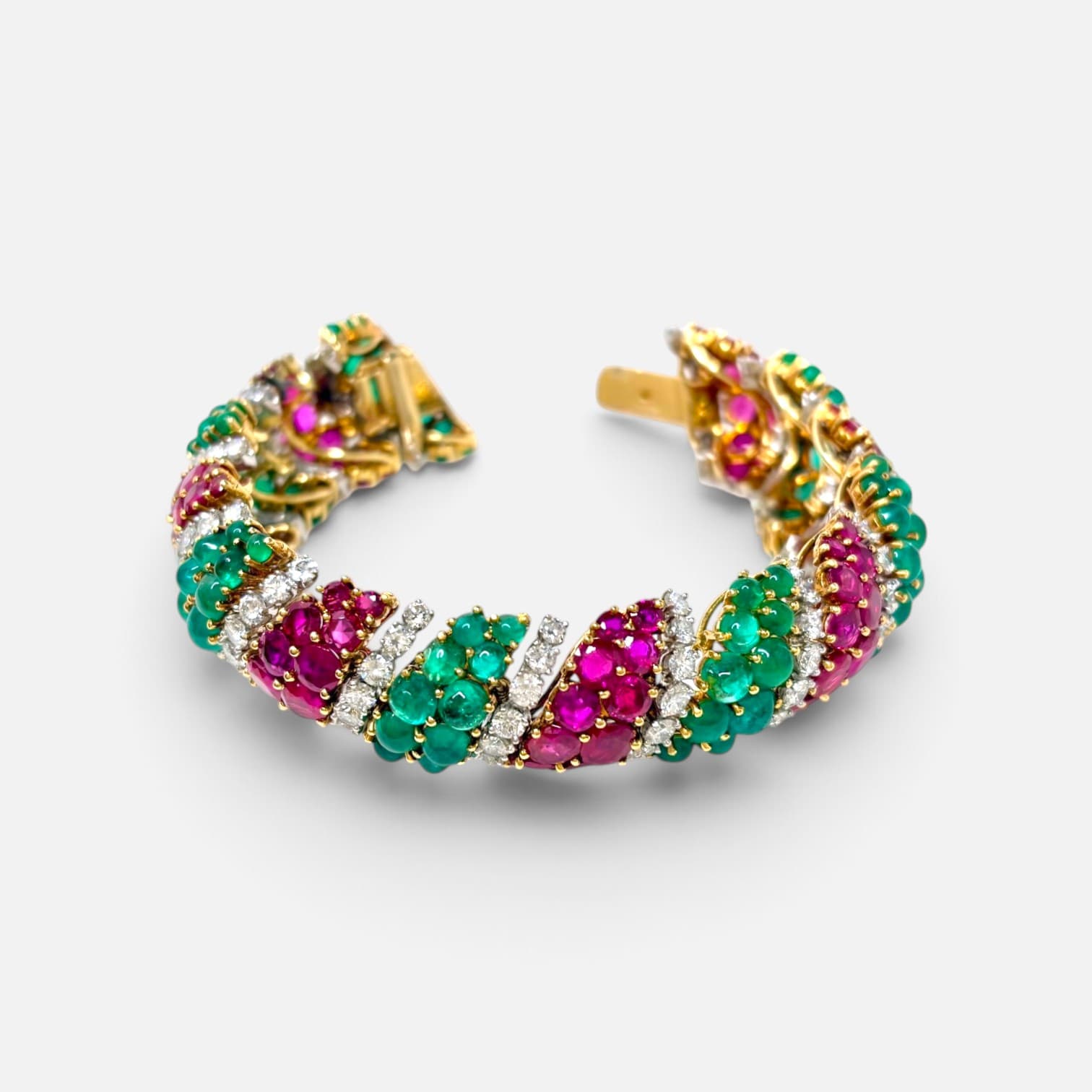
No two emeralds are quite alike, and much of what makes one distinct comes down to where it formed. An emerald's origin shapes its color and its character; alongside it, a handful of qualities separate a fine stone from an ordinary one. Learn to read both, and an emerald stops being simply "green" and starts telling you its story.
Colombia — the classic green
Colombia sets the standard. Its emeralds — from storied mines like Muzo and Chivor — are prized for a pure, slightly warm green with a soft, almost velvety glow, the color most people picture when they imagine an emerald. The finest Colombian stones command the highest prices of any emerald on earth, and a confirmed Colombian origin can lift a stone's value on its own.
Colombian stones often carry a touch more visible jardin than those from other sources — a trade most collectors gladly accept, because at their best that warm, glowing green is simply unmatched.
Zambia — cool and clean
Zambia is now the other great source. Its emeralds tend toward a cooler, slightly bluish-green, and often show better clarity and fewer inclusions than Colombian material — more transparent, more consistent, and, carat for carat, more attainable. Where a Colombian stone can feel romantic and glowing, a fine Zambian one reads as crisp and vivid.
Neither origin is truly "better": it comes down to warmth and pedigree against depth and clarity. The right emerald is simply the one whose color speaks to you in person.
Russia, Afghanistan, Brazil and beyond
The Ural Mountains of Russia yielded historic emeralds — often a deep, slightly yellowish green — many of which now live in antique and estate pieces. Afghanistan's Panjshir Valley produces vivid stones that can rival Colombia's at their best. Brazil offers lighter, more heavily included material in great quantity, and smaller sources such as Ethiopia and Madagascar round out the map. Each origin leaves its own fingerprint in color and character.
Color — the heart of it
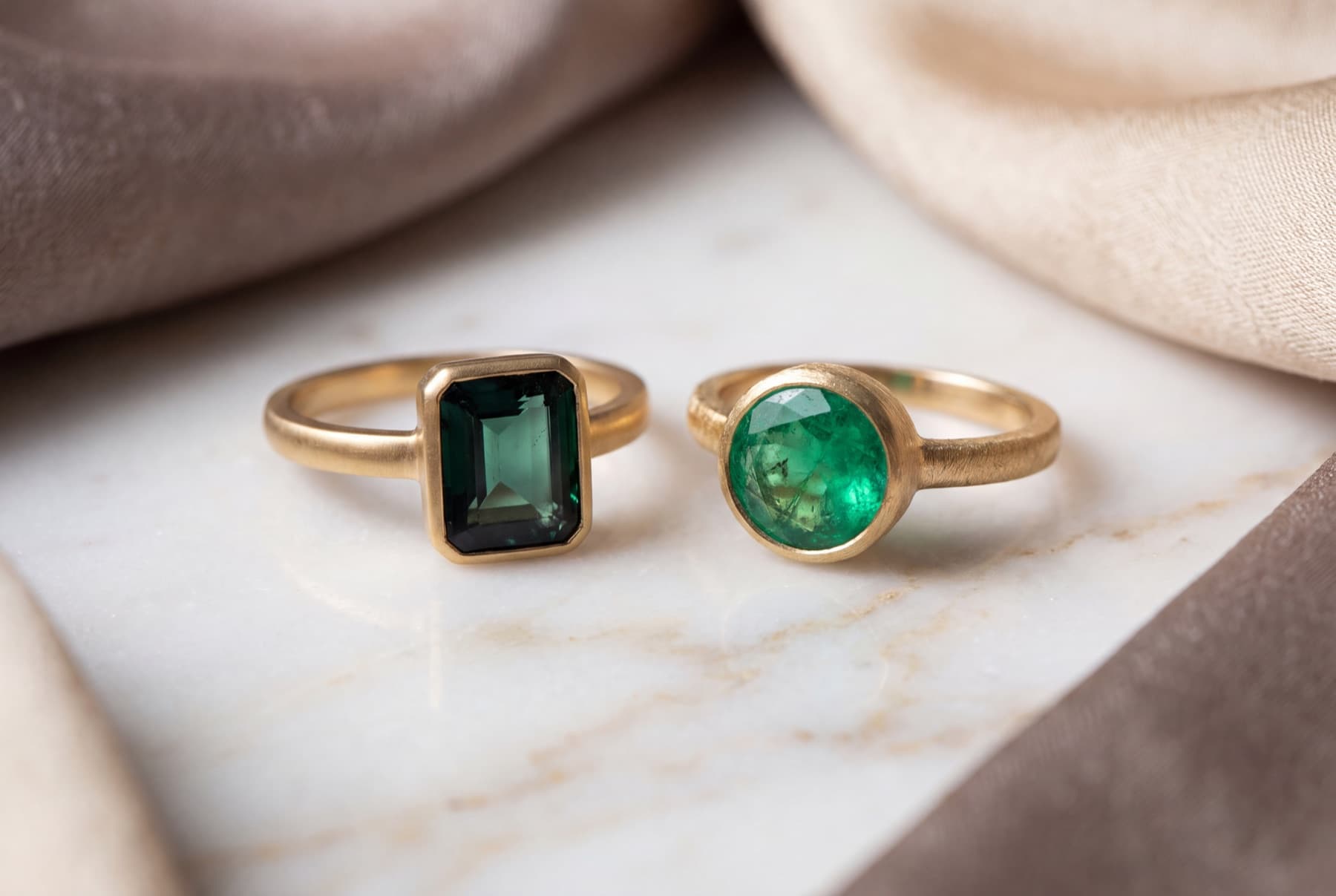
Across every origin, color decides an emerald's worth, and gemologists read it in three parts. Hue is the base color — the ideal is a pure green with just a whisper of blue. Tone is how light or dark the stone is; the finest sit in the middle, neither washed out nor so dark the green closes up. Saturation is how vivid the color is, and it matters most of all: the most prized emeralds seem to glow from within. A top stone reads as a rich, lively, slightly bluish green.
Jardin — the emerald's garden
Where a diamond is judged against flawlessness, an emerald is expected to have inclusions — so much so that they carry a poetic name. Jardin, French for "garden," is the mossy web of fine lines and tiny crystals suspended inside the stone. A completely clean emerald is so rare it invites suspicion; a little jardin is normal, even charming, and part of what tells you a stone is a natural emerald at all. The goal is not an absence of inclusions but a stone whose garden doesn't dull its life or threaten its durability.
Treatment and cut
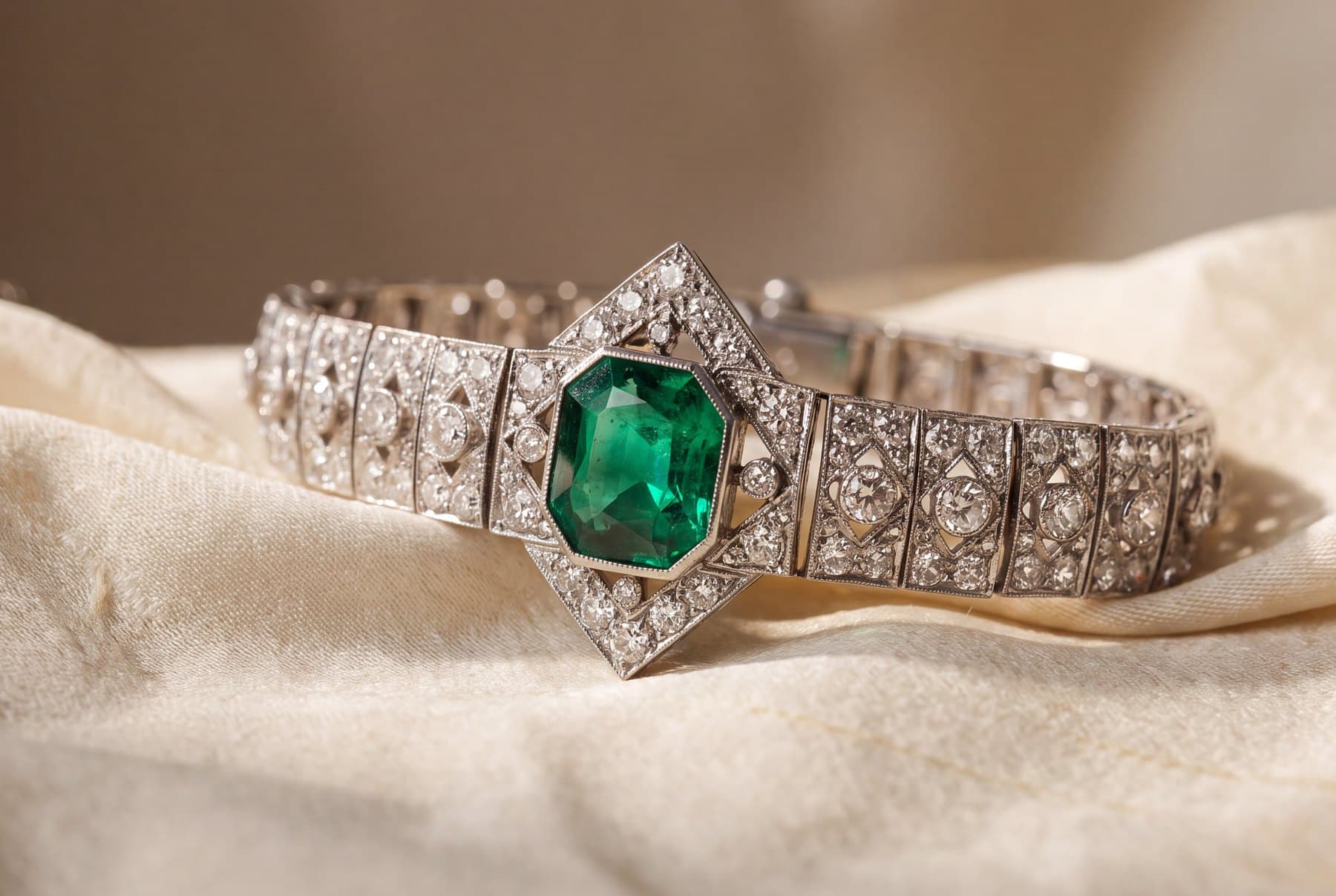
Almost every emerald is treated: its surface-reaching fissures are filled with a clear oil to soften their appearance, a long-accepted and openly disclosed practice. The less oil a stone needs, the finer it is. Cut matters too — the stepped "emerald cut," with its trimmed corners, was devised for this very gem, both to show off its color and to protect its somewhat brittle edges.
Put together — origin, color, jardin, treatment, and cut — these are the full measure of an emerald. We note what we know of each stone's character and, where a piece carries one, its laboratory report; we're always glad to walk you through a stone before you decide.